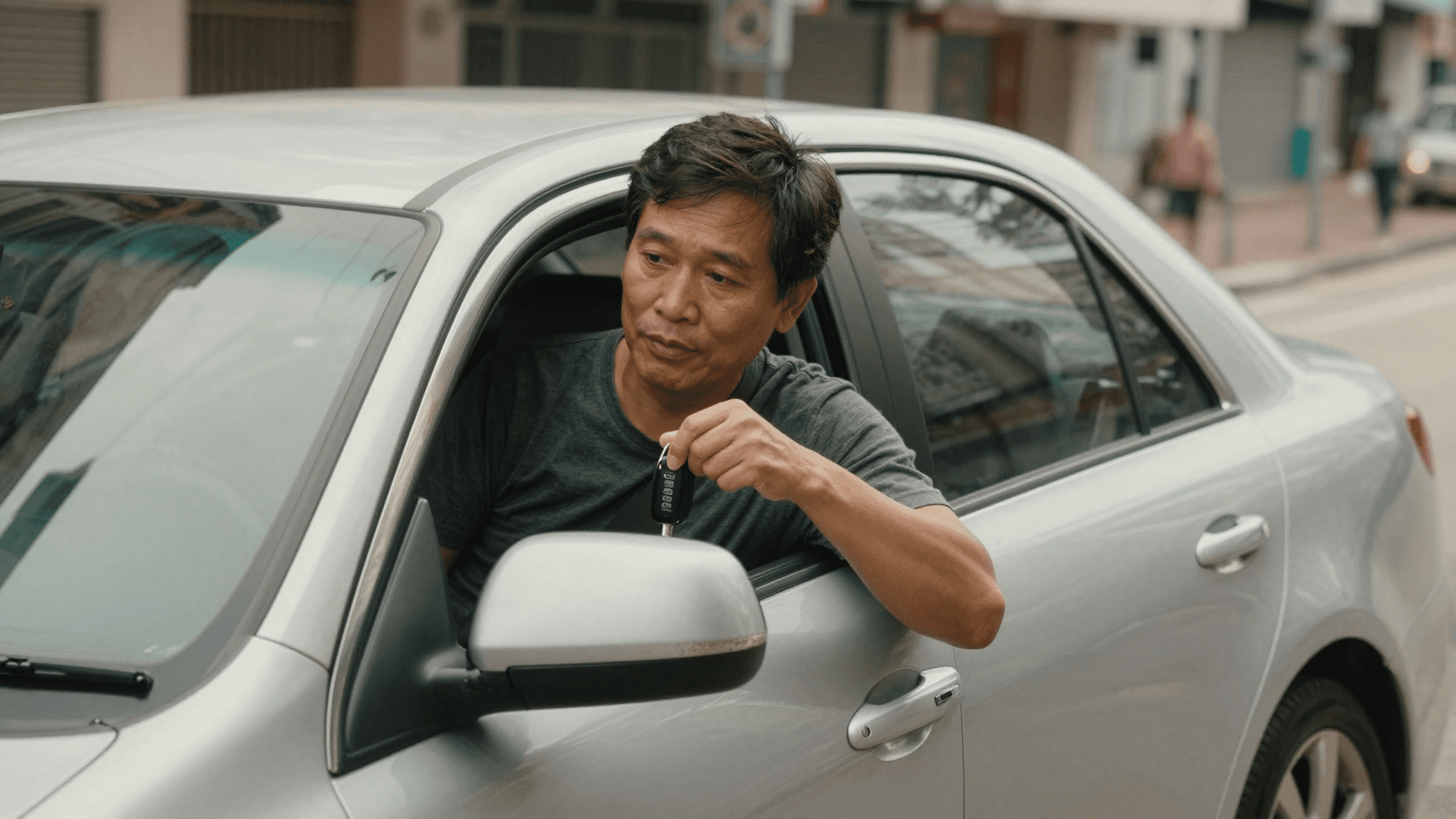
Suppose traffic on Tolo Highway has slowed to a crawl when the car behind runs into you and shoves you into the car in front. Three cars are now stopped in the lane, and yours is dented at both ends.
After a pile-up, your motor insurance treats three things separately: your own car, the car you were pushed into, and your no claim discount (NCD), the renewal discount you earn by not claiming. Being hit from behind does not mean someone else simply pays for everything.
With comprehensive cover, you claim for both ends of your own car from your own insurer. You do not need to prove the other driver was at fault, or even track them down, before you claim.
You do pay the excess, the part of each claim you cover yourself before the insurer pays the rest.
The car in front is dealt with under third party liability, the part of your policy that pays for harm you cause other people. It only pays what the law says you actually owe.
Do you, as the middle car, have to pay for the car in front? Your policy will not tell you. It comes down to the evidence, and the insurers or a court decide.
With third party only cover, your own insurer pays nothing for your own car. This is the easiest point to get wrong.
Below is what the policies we read say. Yours may differ, so check it against your own wording.
Should you move your car on an expressway?
Stop first, then look at the situation. The Road Traffic Ordinance requires a driver to stop if the accident injures another person or damages another vehicle or property.
The police Guidelines on Handling Traffic Accidents say that on an expressway, or a road with a central divider between the two directions, you should move to the nearside, a lay-by or the hard shoulder if possible, then check for injuries and damage.
If anyone is killed or hurt, or the damage is serious, the Transport Department's Road Users' Code says not to move any vehicle involved without a police officer's say-so, unless you need to rescue someone, fight a fire or deal with another emergency.
Inside a tunnel, the same page says do not move your vehicle. Its breakdown in a tunnel advice is to switch off, put the hazard lights on, call the police and wait in the car with your seat belt on. Get out only if there is smoke or fire.
If anyone is hurt, the law says you must report to the police in person as soon as you can, and within 24 hours. The police guidelines also require a report within 24 hours if details were not exchanged.
If nobody is hurt and details have been exchanged, the guidelines say you do not have to report. If you are not sure whether you must report, they say to seek advice from the police straight away.
Report anyway if you may want to recover from the driver behind. One insurer's claim form says that if the crash was down to another driver, you should complain to the police within 10 days and ask them to investigate, to protect your recovery rights.
What to note at the scene, and when to tell your insurer
Take details from the cars in front and behind, but do not argue about who caused it. One insurer's website tells you to note, when it is safe:
Each driver's name, phone number and address
Registration numbers, owners' names and their insurers
Photos of the scene and the damage
Save a copy of any dashcam footage. The police guidelines tell you to keep it for follow-up.
Do not promise anyone money at the scene. Both policies we read say you cannot admit liability, make an offer, promise or pay without the insurer's written consent. An apology is a different matter; see our article on apologies and private settlements.
Tell your insurer as soon as you can. Both policies ask for written notice "immediately", and one insurer's website asks for notice within 7 days. These are separate from the police deadlines, so do not treat them as one.
Pass any letter, writ or summons you later receive to the insurer straight away.
Which part of your motor insurance pays?
Your own car comes under comprehensive cover. Damage or injury to other people comes under third party liability. The policies we read split it like this:
Loss | Which cover pays |
|---|---|
Your own car, front and rear | Comprehensive only, less the excess |
Damage to the car in front or other cars | Both, if you are legally liable |
Injury to anyone, including your passengers | Both, if you are legally liable |
Medical costs for you and your passengers | Comprehensive only, no fault needed |
Towing | One insurer's comprehensive, not tunnel tolls |
Third party only cover has no medical expenses section, but that does not leave your passengers without a route. If a passenger claims against you and you are legally liable, both types of cover respond.
Both policies we read exclude injury to someone you employ while they are working for you.
The limits are on your schedule, the first pages of the policy showing what you bought and how much cover you have.
One insurer's leaflet shows a standard limit of HK$2,000,000 for damage to other people's property, which you can raise to as much as HK$10,000,000.
Your own car is capped too. The same insurer pays up to whichever is lower: the car's reasonable market value when the accident happened, or the estimated value on your schedule.
If you hold comprehensive cover and claim from your own insurer, wait for approval before any repair. One insurer's website says work must not start until it approves the repair quotation, and it first sends someone to inspect the car.
With third party only cover, claiming against the driver behind, and when to repair, is your own decision, according to one insurer's website. Its policy wording says towing and a courtesy car are at your own cost.
How many excesses will you pay?
A pile-up can mean more than one. The amounts are all on your schedule:
Your own car: a general excess
A driver not named on the schedule, under 25, or with a full licence for less than 2 years: a further excess for each, added together
Damage to the car in front: both policies have a Third Party Property Damage Excess
One policy waives it if you hold comprehensive cover, are driving yourself, are aged 30 to 45, have held a full licence for more than 2 years and the claim is only for third party property damage (car group 99 excepted).
One insurer says you must pay that third party excess first; if you do not, it will not pay that part. Neither policy says whether a pile-up counts for one excess or several, so ask your insurer.
With new parts, one insurer also makes you pay a percentage of the cost of the new parts, based on the year of manufacture on the registration document: 0% for 1 year or less, 30% for more than 5 and up to 6 years, and above 30% beyond 6 years.
If you are not sure which apply to you, send us your schedule on WhatsApp and we will go through it line by line.
Will your NCD drop?
By default, yes, even if you were not to blame. Both policies we read say a claim under any part of the policy, including the part that pays for the car in front, cancels or reduces the NCD.
Your NCD is grouped by the number of consecutive claim-free years. This is how one insurer moves you after one claim in a year:
NCD group before the claim | After one claim in the year |
|---|---|
45% or below | Cancelled |
50% | Down to 30% |
60% | Down to 35% |
The group is the level you sit at, not the amount taken off your premium. The insurer sets the actual discount at renewal, using the driver's age, the car's age and other factors. Two or more claims in a year take you to zero.
The same insurer makes an exception, but only if you can do both of these:
Provide evidence of a Hong Kong court conviction against the other driver
Sign a letter, with the insured driver, confirming you have not been prosecuted or received any writ or summons connected with the accident
So the driver behind being convicted is not enough. If you have already been prosecuted, or received a writ or summons, when the letter is due to be signed, the exception is lost.
Its website adds that where the third party faces criminal liability, the NCD can only be restored once the case ends, usually after no less than 1 to 2 years.
Its comprehensive cover also has NCD protection: if a year's claims after excess come to no more than HK$50,000, you keep the discount at renewal. This does not apply if the discount moves to another insurer.
Its example: HK$54,000 of repairs and sundry costs, less excess and depreciation, leaves HK$46,000 paid, so the discount is kept.
If the driver behind is convicted of a traffic offence, the same insurer may also try to recover your excess from them. Whether it does is its decision, success is not guaranteed, and its website says it can take 1 to 2 years. Third party only policies do not include this.
Who is to blame?
We checked the Road Traffic Ordinance, the Road Traffic (Traffic Control) Regulations and the policy wordings. None says the rear car is always liable in a rear-end crash or a pile-up. Liability rests on the evidence and is settled between the insurers or by a court.
The Road Users' Code asks drivers to keep a suitable clear distance from the vehicle ahead. In good conditions it calls a two-second time gap a reasonable and practical rule, and on wet roads the allowance for braking distance should be at least doubled. In legal proceedings, either side can rely on the Code as evidence.
Whether you, as the middle car, owe the car in front anything is something neither the wording nor the law answers. If the car in front claims against you, your insurer can take over, settling with them or defending the claim in court, and you need to give it the information and help it asks for.
What can you do today?
Open your schedule and see which type of cover you bought, and what each excess is.
Save your policy number and your insurer's claims hotline in your phone so you can report straight away.
If you have a dashcam, check it is recording, and save a copy of the footage as soon as anything happens.
免責聲明:本文僅供參考,不構成保險建議。實際保障範圍以保單條款為準。
如需專業保險建議,請聯絡持牌保險代理。
Disclaimer: This article is for reference only and does not constitute insurance advice.
Actual coverage is subject to policy terms and conditions.
The scenario above is a hypothetical example for illustration only. For legal questions, speak to a lawyer.
Related articles
Frequently Asked Questions
In a Hong Kong pile-up, is the car behind always to blame?
Who pays for my car if I am the middle car in a chain collision?
Will my NCD drop if the other driver was at fault?
Should I move my car after a pile-up on a Hong Kong expressway?
How many excesses do I pay after a pile-up?
Caught in the middle of a pile-up and not sure what your policy pays?
Send us your policy schedule, photos from the scene and the police reference number. We will check which parts are covered, which excesses apply and what documents your insurer needs. WhatsApp or call 2633 6813, or email cs@looperin.com.