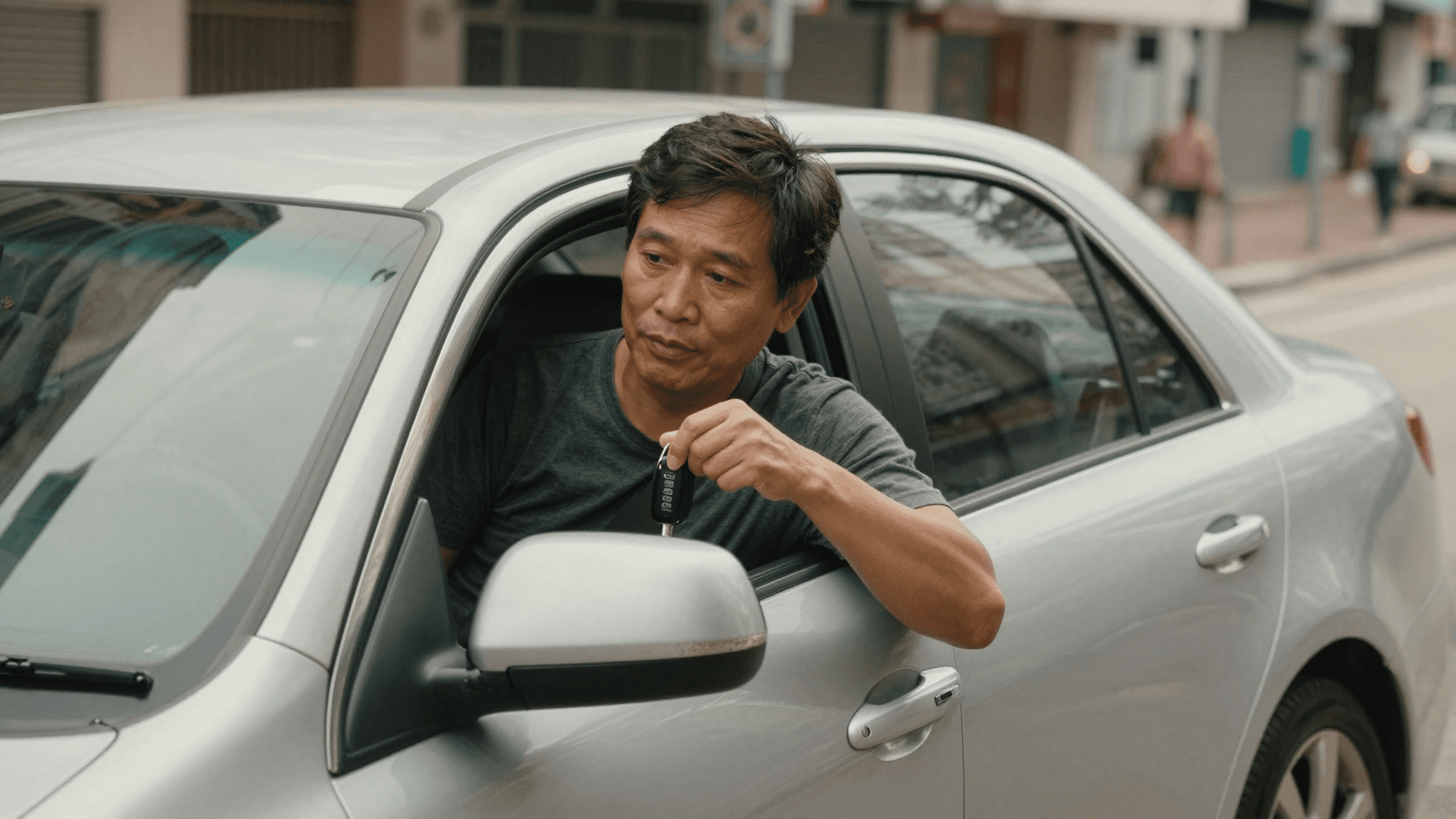
Suppose you are reversing out of a space in a shopping centre car park and tap the car next to you. You step out and apologise at once. The other driver looks at the bumper, says there is no need to involve insurers, and suggests you pay cash now and both sign a note.
Saying sorry does not, by itself, cancel your motor insurance. Section 10 of the Apology Ordinance says an apology does not void or otherwise affect any insurance cover, compensation or other benefit under an insurance contract.
The cash is the real risk. We checked two insurers' private car wordings. Both say no admission, offer, promise, payment or indemnity may be made without the insurer's written consent.
One insurer's website also lists the situations in which it will not accept a claim, and settling privately with a third party is one of them. So if you are asked for cash and a signature, you can hold off, exchange the details the law requires, and tell your insurer.
"One insurer" in this article means one company's wording or website. Your policy may differ, so check your own.
Should you pay cash or sign a note at the scene?
If you might want to claim on your policy later, do not hand over money and do not sign anything that promises to pay. The wording never uses the words "private settlement". Instead it names five acts that need the insurer's consent first:
Word in the policy | What it covers in practice |
|---|---|
Admission | Accepting that you are liable |
Offer | Proposing compensation |
Promise | Agreeing that you will pay |
Payment | Handing money to the other side |
Indemnity | Undertaking to make good the other side's loss |
One insurer's website puts it more bluntly. Where a third party is involved, you must not propose or accept any compensation arrangement without the insurer's written consent, because doing so breaches the policy terms and affects your right to claim.
The wording does not define "admission" and says nothing about notes written at the scene. The cautious approach is to record only each side's details on paper, with no statement about who was at fault and no amount.
The Hong Kong Police leaflet on what to do after a traffic accident have a form on the back for the accident details and both drivers' particulars, so you need not rely on a note the other driver writes.
The same leaflet lists deciding whether to settle with the other party as one of the steps after an accident. The question to ask yourself is whether you still want your insurer to handle it. If you do, get its written consent before agreeing anything.
Holding off is not the same as walking away from responsibility. The clause also lets the insurer take over the defence or settlement of the claim on your behalf, with full discretion over proceedings and settlement. Fault and amount can then be worked out between the insurer and the other side.
Does saying sorry count as admitting fault?
Not in civil and similar proceedings, though criminal proceedings and some others are exceptions. Under the Apology Ordinance, an apology is an expression of regret, sympathy or benevolence, such as saying you are sorry about what happened.
Section 7 says that in judicial, arbitral, administrative, disciplinary and regulatory proceedings, an apology is not an admission of fault or liability and must not be taken into account to your detriment when fault or liability is decided.
Criminal proceedings, coroner's inquests, commissions of inquiry and Legislative Council proceedings are left out.
Any admission of fault inside the apology, and any statement of fact you made with it, count as part of the apology.
On insurance, section 10 is the most direct: an apology does not void or affect any insurance cover, compensation or other benefit under an insurance contract. That holds despite anything to the contrary in a rule of law or an agreement.
Where the Ordinance stops
Situation | Position under the Ordinance |
|---|---|
Criminal proceedings, such as a traffic prosecution | Not among the proceedings it protects |
An apology made in a document filed, or testimony given, in proceedings | The Ordinance does not apply |
You, or someone with your consent, put the apology forward as evidence | The Ordinance does not apply |
Statements of fact inside the apology | A decision maker (including a court, tribunal or arbitrator) may admit them in exceptional cases if it is just and equitable |
Promising money, paying cash, settling privately | Not an apology, so section 10 does not deal with it |
Treat the apology and the settlement as two separate things. Outside the exceptions above, the apology has statutory protection. A promise to pay or a cash payment falls under the five restrictions in your wording.
What does the law require at the scene?
Whether to settle can wait. Stopping, giving your details and reporting where required cannot. Section 56 of the Road Traffic Ordinance deals with accidents that happen owing to the presence of a vehicle on a road.
When | What you must do | Maximum penalty |
|---|---|---|
Someone other than the driver is injured, or another vehicle, a specified animal or other property is damaged | Stop | Level 3 fine (HK$10,000) and 12 months' imprisonment |
A police officer, or anyone with reasonable grounds, asks | Give your name and address, the owner's name and address, and the registration number | Level 4 fine (HK$25,000) and 6 months' imprisonment |
Property damage only, and you did not give those details for any reason | Report in person at the nearest police station or to any police officer, as soon as reasonably practicable and within 24 hours after the accident | Level 4 fine (HK$25,000) and 6 months' imprisonment |
Anyone is injured, including you | Report in person as soon as reasonably practicable and within 24 hours after the accident, unless your injuries make that impossible | Level 4 fine (HK$25,000) and 6 months' imprisonment |
Knowingly giving false details carries the same maximum: a level 4 fine of HK$25,000 and 6 months' imprisonment.
This article does not decide whether a particular car park counts as a road under the Ordinance. Stopping and exchanging details anyway is the safe course.
For serious accidents, meaning someone dies or is seriously injured or there is serious damage, section 57 applies. Moving or interfering with a vehicle involved without a police officer's authority, or destroying, altering or concealing evidence, is an offence.
The maximum penalty is a level 3 fine (HK$10,000) and 6 months' imprisonment. Moving a vehicle to save life, fight a fire or deal with another emergency is a defence.
Do you need to call the police for a minor scrape?
The Transport Department's Road Users' Code says that if only minor vehicle or property damage is involved and nobody is hurt, the drivers can agree to move to a nearby safe place, and a police report is not needed unless police help is required.
The police guidelines name four cases that must be reported as soon as possible and within 24 hours: the parties have not exchanged contact details, anyone is injured, government vehicles or property are involved, or a People's Liberation Army vehicle is involved.
Read the two together. No injuries but no exchange of details still means a report. Where only damage is involved and both drivers stopped and exchanged names, addresses, owners and registration numbers, no report is needed.
Can you settle privately now and claim later?
It is tempting to pay the other driver yourself and keep the policy in reserve in case they come back for more. That plan carries risk.
One insurer's website says it may refuse to handle matters that breach the policy terms and conditions. Its list is expressly not exhaustive and names six situations:
Refusing a breath test
Settling privately with a third party
Driving without a licence, or with an expired one
Using the insured car for commercial purposes
Driving after drinking alcohol or taking drugs
Reporting a claim late
That is a website list, not every exclusion in the wording. In the wording itself, one insurer makes compliance with the terms on what you must and must not do a condition precedent to its liability.
A condition precedent means you have to meet it before the insurer becomes liable to pay. The third party section of the same wording also says the insurer need not indemnify anyone who has not complied with the terms.
The wording does not spell out what follows from breaching the clause on admissions and payments, so the outcome depends on the case. A private settlement does not automatically mean the claim is refused.
Already signed a note, paid cash, or heard from the other driver again? Send us the note and your policy schedule on WhatsApp. We can check what your wording says and how to notify your insurer.
The schedule is the first few pages of your policy, showing what you bought and the limits that apply.
When must you tell your insurer?
As soon as you can, and do not fix on "7 days". Wordings and websites use different yardsticks:
Where it is written | Time limit | What is needed |
|---|---|---|
Both wordings we checked | Immediately | Written notice with full details; forward any letter, claim, writ or summons straight away |
One insurer's website | Within 7 days of the accident | Notify through your agent (if any) or directly, then send documents as soon as possible |
Another insurer's website (older policies) | Within 7 days of the accident | Upload the completed claim form together with every supporting document |
If you learn you are to be prosecuted, one insurer's wording also requires immediate written notice.
The website with the 7-day rule says late reporting can affect your right to claim. It does not say a claim is refused after 7 days, although late reporting is on its list of claims it will not accept.
If the other side later sues, forward the papers at once.
Under the Motor Vehicles Insurance (Third Party Risks) Ordinance, the insurer's statutory duty to pay a judgment where a third party was killed or injured depends, among other things, on it having notice of the proceedings before, or within 7 days after, they begin.
What should you gather for the claim?
The items below come from one insurer's wording and website and from the police guidelines. Note down whatever you can at the scene.
When | What to keep |
|---|---|
At the scene | The other driver's name, address and phone number, the owner's name and address, the registration number and the other driver's insurer |
At the scene | Photos of the damage and any dashcam footage |
If the police are involved | The police file number, and a copy of any notice of intended prosecution |
When you notify | Original accident report and consent form signed by the policyholder and the driver, copies of the driver's valid driving licence and Hong Kong Identity Card, copies of the front and back of the car's registration document, a repair estimate (if any) and any breath test report |
Later | Any claim letter, writ or summons from the other side, forwarded at once |
If the driver was not a named driver on the policy, one insurer's website also asks for their identity card and driving licence and proof of 2 years or more of driving experience.
What can you do today?
Find the clause in your wording containing "No admission, offer, promise" and note what needs your insurer's written consent.
Save your policy number and your insurer's claims contact in your phone so you can notify straight away.
Download the police traffic accident leaflet, print a copy for the car, and use the form on the back if you ever have a bump.
免責聲明:本文僅供參考,不構成保險建議。實際保障範圍以保單條款為準。
如需專業保險建議,請聯絡持牌保險代理。
Disclaimer: This article is for reference only and does not constitute insurance advice.
Actual coverage is subject to policy terms and conditions.
The scenario above is a hypothetical example for illustration only. For legal questions, speak to a lawyer.
Related articles
Frequently Asked Questions
Will my motor insurer refuse a claim because I said sorry after an accident?
Can I settle a car accident privately in Hong Kong and still claim on my motor insurance?
Do I need to report a minor car accident to the police in Hong Kong?
What is the penalty for not stopping after a car accident in Hong Kong?
How soon must I tell my motor insurer about an accident?
Asked to settle on the spot and want a second opinion?
Send us your policy schedule, photos from the scene and the other driver's details. We will check what your wording requires and which documents your insurer will need. WhatsApp or call 2633 6813, or email cs@looperin.com.

Felix Kong
CEO