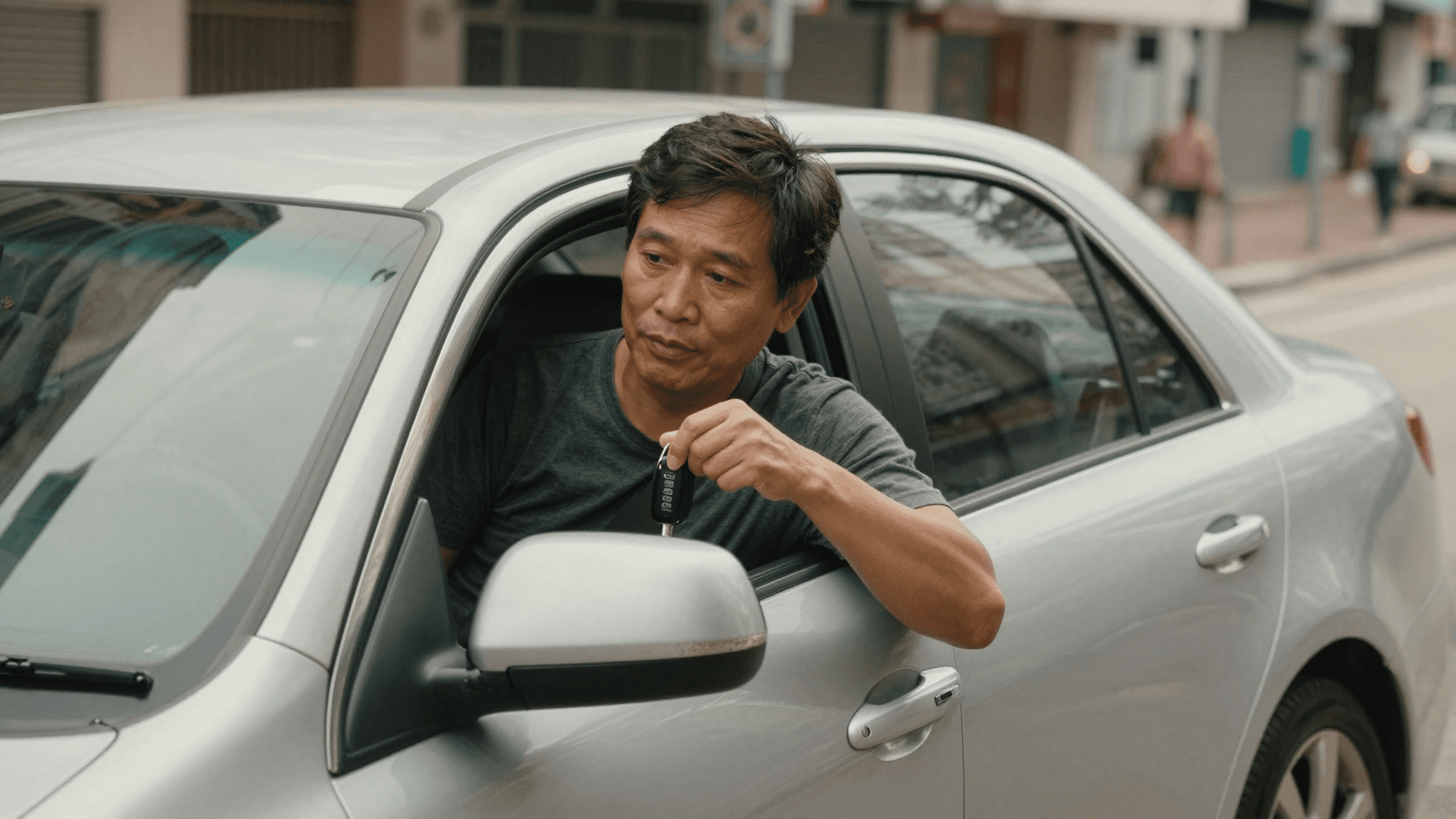
Suppose you have two glasses of wine at a year-end company dinner, feel fine and drive yourself home. You brake late at a junction and hit the car in front. The other driver says his neck hurts, and the police ask you for a breath test.
Your motor insurance may not pay. Both private car wordings we reviewed list three drink or drug situations in which the insurer is not liable, and they apply when the owner is at the wheel, not only when the car is lent out.
The three are: a conviction because drink or drugs left the driver unable to control the car properly; alcohol above the limit in the Road Traffic Ordinance; and a conviction for failing to give a specimen without reasonable excuse.
Injury to other people is treated differently, because the law adds rules of its own. As for whether the insurer can come after you, the wording and the law both contain recovery provisions, but neither says they will always be used or how much.
Where this article says "one insurer", it means one company's wording. Yours may differ, so check your own policy.
Will motor insurance pay if you crash after drinking?
If any of the three situations applies, the wording says the insurer is not liable. They differ on whether a conviction is needed:
Situation | Conviction needed? |
|---|---|
Drink or drugs left the driver unable to control the car properly | Yes |
Alcohol in breath, blood or urine above the prescribed limit | The wording does not mention one |
Failing, without reasonable excuse, to provide a breath, blood or urine specimen | Yes |
One insurer's wording goes further on the third item and also covers oral fluid specimens and other tests required by law.
For the alcohol limit item, the wording does not say a conviction is needed, and does not say how the reading has to be proven. How a case without a conviction is handled is not answered, so ask the insurer.
All three apply to "the Insured or Insured Driver". In plain terms, that is you driving your own car as well as anyone you let drive it.
The scope is also wider than driving. One insurer's wording covers any time the car is being driven, someone is attempting to drive it, or it is in the charge of the Insured or an Insured Driver.
The clause sits in the policy's General Exceptions, the list of situations in which nothing under the policy is paid. We will call it the drink-driving exception below.
In one of the wordings it opens with "The Insurer shall not be liable under this Policy". So it is not limited to one section: damage to your own car, third party liability and medical expenses are all caught.
Your car, their car, injured people: how do they differ?
The three get different answers. For your own car, the wording says the insurer is not liable. Someone else's car falls within the exception on a literal reading. Injuries to people bring in separate rules under the law.
Part of the claim | What the wording and the law say |
|---|---|
Damage to your own car | The exception covers the whole policy, own damage included |
Third party property, such as another car | The wording's literal scope includes third party liability; the law does not make property cover compulsory |
Third party death or injury | The law has several separate rules; how they interact with the exception is not answered point by point |
If you are not sure what the exceptions page of your own policy says, send the wording to us on WhatsApp and we will find it and read it through with you.
Damage to your own car
If one of the three situations applies, the wording says the insurer is not liable, and the own damage section is included. Repairs to your car would not be covered by the policy.
One insurer's website lists claims it will not accept, including refusing an alcohol test and driving after drinking or taking drugs. The website says the list is "including but not limited to" those items.
Damage to someone else's property
You might think third party cover is compulsory, so damage to another person's car is always paid, even after a drink. In fact, the compulsory part of motor insurance is limited to death and bodily injury.
The Motor Vehicles Insurance (Third Party Risks) Ordinance requires a policy to cover death of or bodily injury to other people, except the insured's own employees injured at work. It does not require cover for third party property damage.
Read literally, the drink-driving exception also covers third party liability. Taken together, the literal reading is that this part is not covered, but we have not found a court case or an insurer confirming it.
So if you hit someone else's car after drinking, do not assume your policy will pay for it.
Injuring someone: what do the law and the wording say?
For injury to a third party, the Motor Vehicles Insurance (Third Party Risks) Ordinance has several provisions. How they interact with the drink-driving exception is not answered point by point. This is what the text says:
Section | What it says |
|---|---|
Section 6(2) | "Notwithstanding anything in any law", the insurer must indemnify the persons specified in the policy for any liability the policy purports to cover |
Section 9 | A policy condition that no liability arises if something is done or not done after the event is "of no effect" for third party injury claims |
Section 10 | If an insured person is ordered to pay for third party death or injury that is "a liability covered by the terms of the policy", the insurer must pay the judgment, with costs and interest, even if it is entitled to avoid or cancel the policy |
Section 12(1) | Limits on cover tied to the driver's age, or to their "physical or mental condition", among other matters, have no effect for third party injury liability |
Section 10 lists exceptions, for example where the insurer had no notice of the proceedings or the judgment is stayed pending an appeal.
Section 12(1) does not say whether drinking counts as a physical or mental condition, and we have not found a court case or official explanation on it.
How the statutory duty for third party death or injury interacts with the policy exception is not answered point by point in the text. It is a question of legal liability, so speak to a lawyer.
Can the insurer recover the money from you?
The wording and the law both have recovery provisions, but they are written as rights. They do not say the insurer will always recover, whether it goes after the owner or the driver first, or how much.
Both wordings we reviewed have a right of recovery clause. It covers one situation: the insurer has to pay, because of Hong Kong law or an agreement with the Motor Insurers' Bureau, an amount the policy would not otherwise have required.
In that case, the wording says the Insured and any other person on whose account the payment was made must repay the insurer forthwith. It does not name the owner and the driver separately.
The law has matching provisions. Section 10 of the Ordinance says that if what the insurer pays under that section exceeds what the policy would have required, the insurer is entitled to recover the excess from the insured person.
Sections 9 and 12 work in a similar way. Section 9 still allows a policy to require the insured to repay sums paid to third parties, and section 12 lets the insurer recover what it paid because of that section.
Whether any of these provisions would be used in a particular case, and for how much, is not answered point by point in the text.
The police ask for a breath test: what if you refuse?
Refusing does not mean the claim is paid for lack of evidence. A conviction for failing to give a specimen without reasonable excuse is one of the three exceptions in its own right.
Under the law, a uniformed police officer can require a driver to take a screening breath test, including someone reasonably suspected of having been the driver at the time of an accident.
Failing to provide a specimen without reasonable excuse is an offence. The officer must warn you that refusing may lead to prosecution, and can arrest you without a warrant.
If the police then ask for specimens for analysis, such as 2 breath specimens or a blood or urine specimen, failing to provide them without reasonable excuse is also an offence.
The maximum penalties for refusing match those for exceeding the limit. On a first summary conviction, that is a fine at level 3 (HK$10,000) and 6 months in prison.
The disqualification is longer, though. A first conviction for refusing a screening breath test carries at least 2 years off the road, compared with at least 6 months for a first tier 1 alcohol offence.
When you claim, one insurer asks for a copy of the driver's breath test report. If the police did not ask for a test, you are asked to say so in writing.
What are the legal alcohol limits and penalties?
The Road Traffic Ordinance measures the concentration of alcohol in breath, blood or urine, not the number of drinks. We have not found any official conversion from glasses to readings.
The prescribed limit and the three tiers are set out below, each per 100 millilitres. The alcohol tiers are separate from the fine levels mentioned later.
Tier | Breath (micrograms) | Blood (milligrams) | Urine (milligrams) |
|---|---|---|---|
Prescribed limit | 22 | 50 | 67 |
Tier 1 | Above the limit, below 35 | Above the limit, below 80 | Above the limit, below 107 |
Tier 2 | Above tier 1, below 66 | Above tier 1, below 150 | Above tier 1, below 201 |
Tier 3 | Above tier 2 | Above tier 2 | Above tier 2 |
It is an offence to drive, try to drive or be in charge of a motor vehicle on a road with alcohol over the limit. The maximum penalties depend on how the case is tried and on your record:
First summary conviction: a fine at level 3 (HK$10,000) and 6 months in prison
Repeat conviction, or a previous conviction for a related drink-driving or refusal offence: a fine at level 4 (HK$25,000) and 12 months in prison
Conviction on indictment: a fine at level 4 (HK$25,000) and 3 years in prison
Disqualification is mandatory, with minimum periods set by tier:
Tier | First conviction, at least | Repeat conviction, at least |
|---|---|---|
Tier 1 | 6 months | 2 years |
Tier 2 | 12 months | 3 years |
Tier 3 | 2 years | 5 years |
These are minimum periods, not fixed ones. Only where the court finds special reasons can it order a shorter period or no disqualification, and the law does not list what counts as a special reason.
A separate offence covers driving while unfit through drink to the point of being unable to control the car. The maximum penalties are the same, with disqualification of at least 2 years on a first conviction and at least 5 years after that.
If a breath analysis shows you are over the limit, an officer can require you to surrender your driving licence for 24 hours. You must not drive any motor vehicle during that time.
Driving within those 24 hours carries a maximum fine at level 3 (HK$10,000) and 12 months in prison, with disqualification of at least 12 months, or at least 3 years for a repeat offence, unless the court finds special reasons.
(Fine levels follow Schedule 8 of the Criminal Procedure Ordinance, version dated 14 May 2026, checked in November 2026.)
What can you do today?
Open the General Exceptions in your policy, find the drink and drugs clause and read how the three situations are worded.
Tell family members who drive your car that the clause applies to "the Insured or Insured Driver", whoever is driving.
Save the policy wording on your phone, so after an accident you can see which documents a claim needs, such as the breath test report.
免責聲明:本文僅供參考,不構成保險建議。實際保障範圍以保單條款為準。
如需專業保險建議,請聯絡持牌保險代理。
Disclaimer: This article is for reference only and does not constitute insurance advice.
Actual coverage is subject to policy terms and conditions.
The scenario above is a hypothetical example for illustration only. For legal questions, speak to a lawyer.
Related articles
Frequently Asked Questions
Will my motor insurance pay if I crash after drinking in Hong Kong?
I was over the limit but not convicted. Will the insurer pay?
If I injure someone while drink-driving, will the insurer pay the third party?
Can the insurer recover from me after paying a third party?
What is the drink-driving limit and penalty in Hong Kong?
Want to know what your own policy says about drinking?
Send us your motor policy wording and schedule. We will find the drink-driving exception and the recovery clause and go through them with you line by line. WhatsApp or call 2633 6813, or email cs@looperin.com.

Felix Kong
CEO