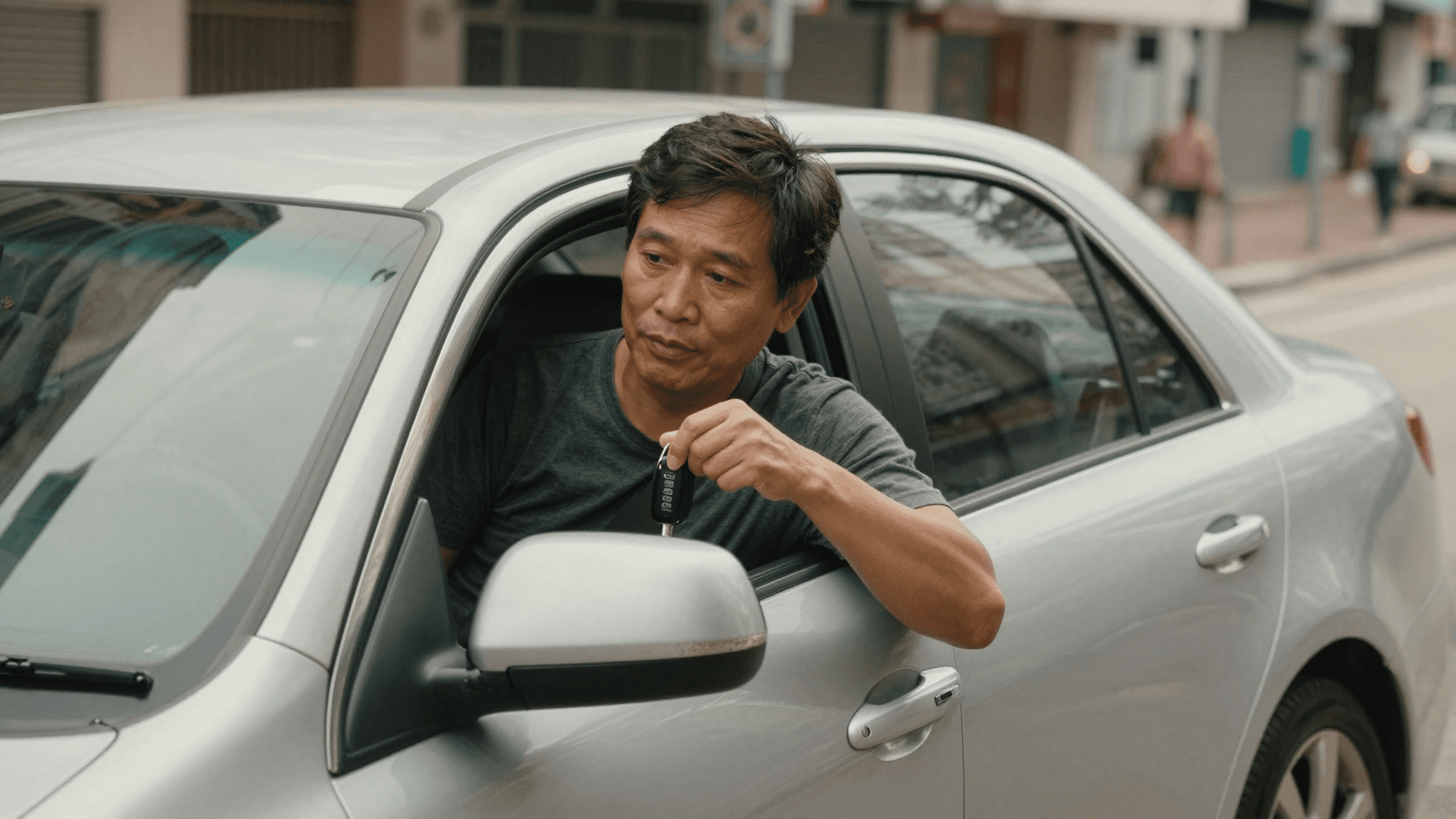
Suppose a friend borrows your car to collect family from the airport, reverses into a pillar in the car park and rings you from behind a dented bumper.
Your motor insurance will usually still pay, provided the driver had your permission and the licence condition is met. The policy calls this person an Insured Driver, and they do not need to be named on it.
Two things stay with you, though. The excess on your own car repair can stack up, and the claim counts against your no claim discount (NCD).
Will the policy pay if a friend crashes your car?
Usually, if you gave permission, the driver is licensed and the use is within the policy.
Two terms are worth separating. An Insured Driver is anyone driving with your permission who meets the licence condition. A Named Driver is someone listed on your schedule, the first pages of the policy showing what you bought and for how much.
Situation | What the wording says |
|---|---|
Your permission, licensed, private use | Usually an Insured Driver, so the policy applies |
Your permission, licensed, not named | Can still be an Insured Driver, with an extra excess on your own car |
No licence, or disqualified | The wording says the Insured or the person driving must hold a licence. It does not answer the case of a licensed owner and an unlicensed friend. You could break the law, so do not lend |
Car used for hire or reward | Outside permitted use, so not covered |
Driver over the alcohol limit, or convicted for drink or drugs | Excluded, and this applies to the owner too |
Third party only cover will not pay to repair your own car. Damage to your own car in an accident needs comprehensive cover.
How much do you pay yourself?
An excess is the part of each claim you pay first. On your own car repair, the wording adds to the general excess according to who was driving, and it says these amounts are calculated cumulatively.
Three add-ons matter here:
Unnamed driver excess: the driver is not listed on your schedule.
Young driver excess: the driver is under 25.
Inexperienced driver excess: the driver has held a licence for under 2 years, not counting a provisional licence.
Here is how they stack:
Who was driving | Excess on your own car |
|---|---|
Named driver, 30, licensed 10 years | General |
Unnamed friend, 30, licensed 10 years | General + unnamed driver |
Unnamed son or daughter, 23, licensed 3 years | General + unnamed driver + young driver |
Unnamed son or daughter, 23, licensed 1 year | General + unnamed driver + young driver + inexperienced driver |
The amounts are not in the wording. They sit on your own schedule. To see what yours would come to, send us your schedule on WhatsApp.
Hitting another car brings its own excess. One insurer's wording charges a third party property damage excess, adds to it for drivers under 25 or licensed under 2 years, and says you must pay it before the insurer has to pay the claim.
If your friend is hurt, the medical expenses section of a comprehensive policy covers an Insured Driver and passengers up to the limit on your schedule. One insurer's comprehensive personal accident benefit of HK$100,000 covers only the owner and Named Drivers, so an unnamed friend is left out.
Whose NCD drops?
Yours. The NCD sits on the policy, so a friend's accident counts as a claim on your policy, whoever was at fault.
One insurer's wording has a single exception: you produce evidence of a Hong Kong court conviction against the other driver, and both you and the person driving sign to confirm neither was prosecuted.
How far it falls depends on the wording. This is one insurer's table:
NCD before the claim | After one claim in the year |
|---|---|
45% or below | Cancelled |
50% | Falls to 30% |
60% | Falls to 35% |
More than one claim in a year cancels it. Another insurer's older wording drops 50% and 60% to 20% and 30% after one claim. The actual discount is set at renewal.
One insurer's comprehensive cover protects the NCD if all claims in the year, after excess, total no more than HK$50,000. That protection does not apply if the discount moves to another insurer.
What should you do on the first day?
Do not accept blame. The policy says nobody may admit liability, offer, promise or pay without the insurer's written consent, and that binds your friend as well as you.
Tell the insurer in writing straight away, and pass on any letter, writ or summons as soon as it arrives.
One insurer asks for these documents:
An accident report and consent form signed by the driver
The driver's licence and Hong Kong ID card copies
The vehicle registration document
A repair quotation, if available
A breath test report, if any
The driver has to sign and supply these personally, so your friend will need to be involved.
Can the insurer come back to you?
Possibly. The law protects the injured person. An insurer may have to satisfy a court judgment even if it could cancel the policy, with exceptions set out in the Motor Vehicles Insurance (Third Party Risks) Ordinance.
The policy also says that if the insurer has to pay an amount by law that the policy would not otherwise have paid, the insured and the person it was paid for must repay it at once.
That applies to the part the policy would not have paid, so it is not every claim. The wording does not say whether the owner or the driver is pursued first. This is a legal question, so speak to a lawyer if it arises.
Could the owner break the law by lending a car?
Yes, if the car has no valid third party insurance or you lend it to someone without the right licence. Both laws use the word "permit".
Permitting use of a car without compliant third party cover: under the Ordinance above, a maximum fine at level 3 (HK$10,000) and 12 months in prison, plus disqualification for 12 months to 3 years unless the court finds special reasons.
Permitting someone without the right licence to drive: under section 42 of the Road Traffic Ordinance, a maximum fine at level 2 (HK$5,000) and 3 months in prison on first conviction, then level 3 (HK$10,000) and 6 months.
The second is the easy one to get wrong. Prosecutors do not need to prove you knew, and not knowing is no defence. Look at the licence before you hand over the key.
Fine levels are from Schedule 8 of the Criminal Procedure Ordinance, as read in November 2026.
What can you do today?
Open your policy schedule and:
Check that everyone who regularly drives your car is a Named Driver.
Find the unnamed, young and inexperienced driver excesses, and tell your family the amounts.
Next time, look at the driver's licence and ask what the car is for. Hire or reward is not covered.
If someone drives your car often, ask the insurer about naming them and what that does to the premium.
免責聲明:本文僅供參考,不構成保險建議。實際保障範圍以保單條款為準。
如需專業保險建議,請聯絡持牌保險代理。
Disclaimer: This article is for reference only and does not constitute insurance advice.
Actual coverage is subject to policy terms and conditions.
The scenario above is a hypothetical example for illustration only. For legal questions, speak to a lawyer.
Related articles
Frequently Asked Questions
Does motor insurance cover a friend who crashes my car in Hong Kong?
How much extra excess applies to an unnamed driver?
Will my NCD drop if a friend crashes my car?
Am I liable if an unlicensed friend drives my car?
Should I name a family member who often drives my car?
Not sure what a different driver would cost you?
Send us your policy schedule and we will check your named drivers and the unnamed, young and inexperienced driver excesses. WhatsApp or call 2633 6813, or email cs@looperin.com.