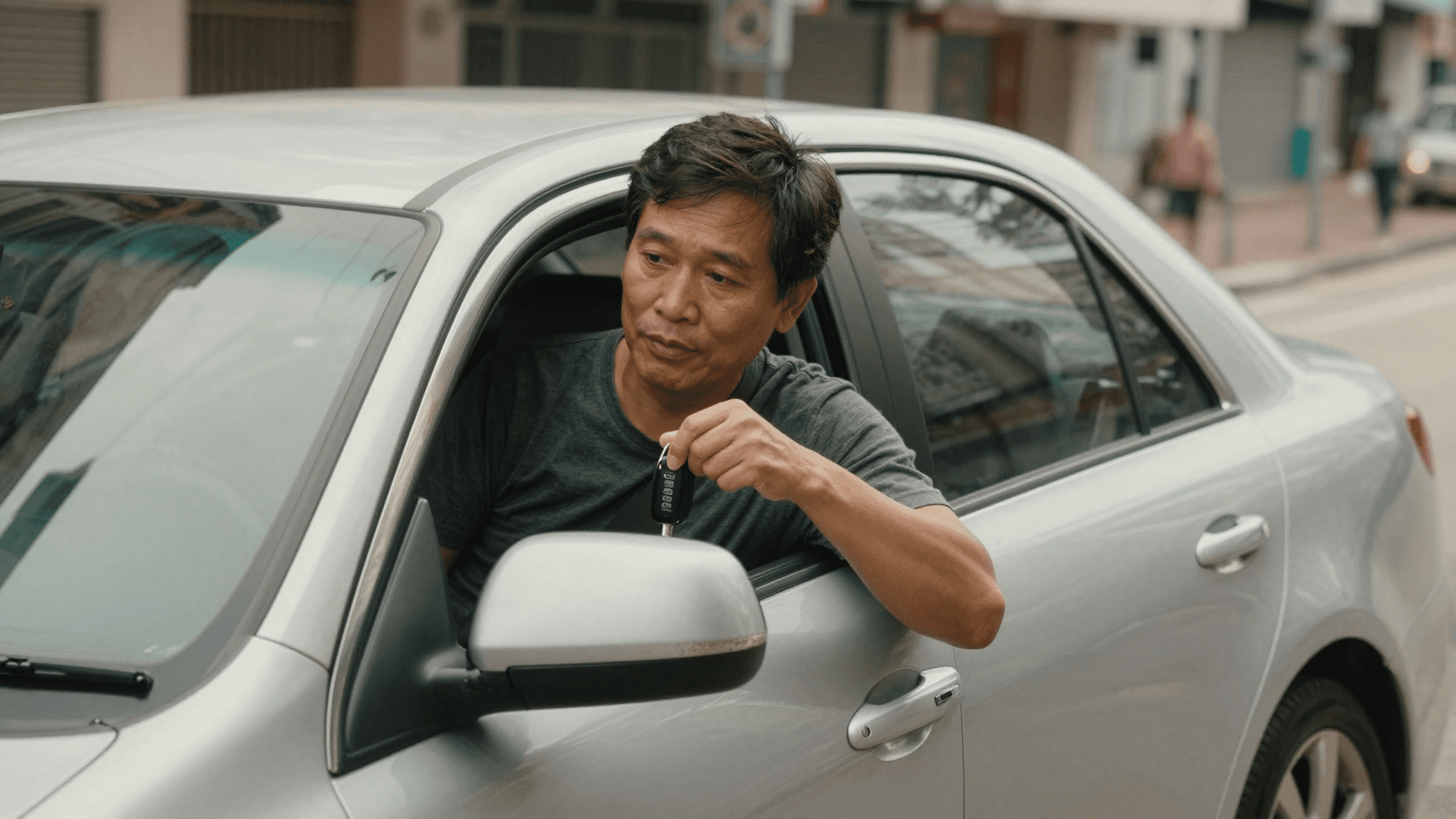
Suppose you have had your car for 8 years and the renewal notice has just arrived. You are tempted to drop comprehensive for third party, fire and theft. With "fire and theft" in the name, it sounds as if your own car is still covered.
Third party, fire and theft (TPFT) motor insurance covers your own car for a short list of causes only. One insurer's private car wording limits it to loss or damage resulting directly from fire, self-ignition, lightning, explosion, theft or attempted theft.
Collision is not on that list. So if you crash, damage to your own car falls outside what TPFT lists. Your legal liability for other people's injuries and property is still covered.
Comprehensive cover is what pays for your own car after a crash. The gap goes further than that: medical expenses for people in your car, NCD protection, roadside repair and towing are not part of TPFT.
Where this article says "one insurer", it means one company's wording. Yours may differ, so check your own policy.
If you crash, does TPFT pay?
For the other side, yes. For your own car, the damage is outside the listed causes. One insurer's wording builds TPFT from two parts: your own car (Section 1) for six causes only, plus third party liability (Section 2).
After a crash | TPFT | Comprehensive |
|---|---|---|
Repairs to your own car | Not among the listed causes | Covered, less the excess |
Damage to another car | Your legal liability is covered | Your legal liability is covered |
Injury to another person | Your legal liability is covered | Your legal liability is covered |
Medical expenses for people in your car | Not included | Reasonable expenses, amount on the schedule |
The excess is the part of each claim you pay yourself before the insurer pays the rest.
The wording adds that the loss must arise "independently of all other causes". It does not explain how that works when a car catches fire after a crash, or is stolen and then wrecked. For cases like these, ask your insurer.
Before you switch, ask yourself one question: if you crashed tomorrow, are you ready to pay for your own repairs?
How do the three types of cover compare?
The difference is how much of your own car is covered. One insurer's private car wording has three types of cover, and all three include third party liability.
Type of cover | Your own car (Section 1) | Third party liability (Section 2) | Medical expenses (Section 3) |
|---|---|---|---|
Comprehensive | Covered | Covered | Covered |
Third party, fire and theft | Fire, self-ignition, lightning, explosion, theft and attempted theft only | Covered | Not included |
Third party only | Not included | Covered | Not included |
Third party liability covers injury to other people and damage to their property. The medical expenses section pays reasonable costs for people in your car, up to the amount on your schedule.
The schedule is the first few pages of the policy, showing what you bought and for how much. One insurer's wording says your type of cover is whatever the schedule states under "Terms of Cover".
How does TPFT pay for fire or theft?
These are the losses TPFT is built for. One insurer caps payment for your own car at the lower of two figures: its reasonable market value when the loss happens, and the estimated value on your schedule.
After 8 years with the same car, check what estimated value your schedule shows before you renew.
Fire, self-ignition, lightning or explosion
The own damage excess clauses in both wordings we checked say neither the general excess nor any additional excess applies to loss from these four causes, provided it arises independently and not out of an earlier accident involving the car.
Additional excesses are the extra amounts for an unnamed driver, a young driver or an inexperienced driver, charged on top of the general excess.
Self-ignition is one of the listed causes, but the wording does not define it, and it does not define fire, lightning or explosion either. Whether your own case counts is a question for your insurer.
Theft or attempted theft
The excess clauses in both wordings say a claim for theft or attempted theft carries only the Theft Loss Excess on your schedule. The general excess and the other additional excesses are not added on top.
The wording does not give the amount. You will find it on your policy schedule.
What the wording does not answer
We found no clause that deals with these situations item by item, so do not assume either way:
Fire after a collision
A car stolen and then damaged in a crash
A window smashed by a thief, and how the glass is treated
Theft of belongings, number plates or tyres
If one of these happens to you, ask your insurer how it will be handled.
Which extra benefits do you lose?
Most of them. One insurer's private car wording lists 13 extra benefits. All of them apply to comprehensive cover, while TPFT and third party only get the last 3.
Extra benefit | Comprehensive | TPFT |
|---|---|---|
NCD protection | Applies | Does not apply |
Free windscreen cover | Applies | Does not apply |
Claims recovery service | Applies | Does not apply |
24-hour roadside repair, towing and a substitute car | Applies | At your own cost |
Electric car charger third party legal liability | Applies | Applies |
24-hour traffic regulation and claims enquiry services | Applies | Applies |
NCD protection lets you keep your discount at renewal if all claims in the policy year, after excess, add up to no more than HK$50,000. Move to TPFT and it no longer applies.
Compare any premium saving with what this table says you would lose. If you are not sure which of these your current policy gives you, send us your schedule on WhatsApp and we will tell you what a switch would take away.
What happens to your NCD?
You need to ask. Neither the wording nor any public material we found says whether a TPFT quote includes NCD, or how much.
Your no claim discount (NCD) builds with each claim-free year. On one insurer's scale, five or more claim-free years in a row puts you in the 60% group, though the group is not the exact discount you get.
The same wording says any claim under any part of the policy cancels or reduces the NCD, whoever was at fault, apart from one narrow exception set out in the wording. One claim in a year takes a 60% group down to 35%, and wipes out a group of 45% or below.
To take your NCD to another insurer, see 5 things to check before you switch.
Does every insurer offer TPFT?
No. Another insurer's older private car wording has only two types of cover, comprehensive and third party legal liabilities. In that wording, fire and theft appear only in the own-car excess and extra benefit clauses.
Even the insurer whose wording has three types shows just two columns, third party and comprehensive, in the benefits table of its product leaflet.
So start by asking whether TPFT is available to you at all, then put that quote next to a comprehensive one.
What does the law require?
Only cover for injury to other people. Under the Motor Vehicles Insurance (Third Party Risks) Ordinance, using a car on a road needs a third party policy covering your legal liability if you kill or injure someone.
The minimum is HK$100,000,000 per event, an amount set by the Motor Vehicles Insurance (Third Party Risks) Regulations.
Damage to other people's property, and fire, theft or crash damage to your own car, sit outside the compulsory part. Comprehensive and TPFT are both your choice, not legal requirements.
Driving without a valid third party policy carries a maximum fine of HK$10,000 and 12 months in prison, plus disqualification for 12 months to 3 years unless the court finds special reasons.
What can you do today?
Open your schedule and note the type of cover, the estimated value and the Theft Loss Excess.
List the extra benefits your comprehensive policy gives you now, such as NCD protection, roadside repair, towing and a substitute car.
Ask whether TPFT is available and whether its quote includes NCD, then compare it with a comprehensive quote before deciding.
免責聲明:本文僅供參考,不構成保險建議。實際保障範圍以保單條款為準。
如需專業保險建議,請聯絡持牌保險代理。
Disclaimer: This article is for reference only and does not constitute insurance advice.
Actual coverage is subject to policy terms and conditions.
The scenario above is a hypothetical example for illustration only. For legal questions, speak to a lawyer.
Related articles
Frequently Asked Questions
Does third party, fire and theft cover my own car if I crash?
What is the difference between third party, fire and theft and comprehensive?
Does third party, fire and theft cover self-ignition?
What excess do I pay if my car is stolen?
Does Hong Kong law require comprehensive motor insurance?
Moving from comprehensive to fire and theft?
Send us your policy schedule and renewal notice. We will check which type of cover you have now, which extra benefits come with it and what a switch would take away. WhatsApp or call 2633 6813, or email cs@looperin.com.