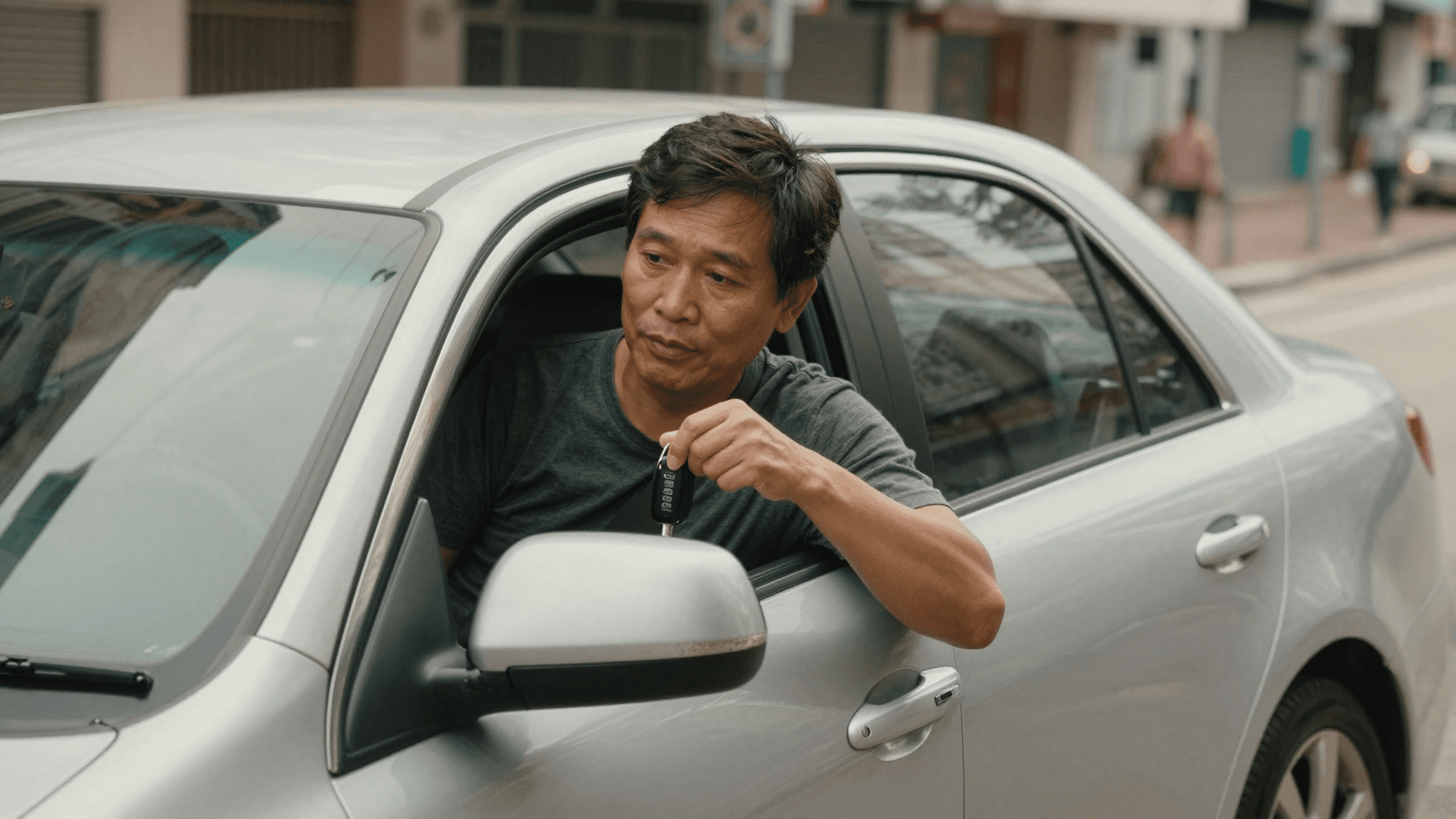
Suppose you run a wholesale business and your employee rear-ends another car while making a delivery. The front of the van is wrecked, the goods are all over the road, and your employee has a broken arm.
Commercial vehicle insurance deals with the vehicle and third parties. One insurer's wording says the goods on board and the employee driving are not covered by that policy, so other cover has to respond.
A single accident can involve three policies. The commercial vehicle clauses quoted below come from one insurer, and others may differ. Your own policy applies.
Which policy pays for what?
Loss | Commercial comprehensive | Employees' Compensation |
|---|---|---|
Damage to the van | Paid, less the excess | Not relevant |
The other car and anyone hurt in it | Paid, up to the third party limit | Not relevant |
Goods on board | Not paid | Not relevant |
Your employee hurt at work | Not paid | Paid, the employer is responsible for accidents in the course of employment |
The excess is the part of each claim you pay first. A third party is the person or vehicle you hit. Third party only cover (no comprehensive) leaves out the van itself.
Be careful if you drive yourself. This wording has only vehicle damage and third party sections, with no medical expenses or personal accident section. Ask at the time of buying which policy would respond if you were hurt.
Why are the goods not covered?
Neither section includes them. Vehicle damage covers the vehicle, accessories and spare parts on board, and the wording does not list goods. The third party section excludes "property being conveyed" by the vehicle or a trailer attached to it.
The wording also excludes utensils and stock-in-trade on board, which would include a wholesaler's goods. Whether tools count as utensils is a question for the insurer.
For goods, you need separate cover. One insurer offers freight liability cover to road transport operators, with terms set case by case.
Whether you need it depends on what you carry and where. Send us your policy and the value of your goods on WhatsApp and we will look for gaps.
Does motor insurance pay if your driver is hurt?
No. That is a matter for Employees' Compensation Insurance. The wording says third party liability does not include employees injured or killed at work.
The law splits it the same way. The Motor Vehicles Insurance (Third Party Risks) Ordinance requires motor cover for third party death or injury, but not for the insured's own employees injured in their employment.
That falls under the Employees' Compensation Ordinance. An employer with no such insurance faces a maximum fine of HK$100,000 and 2 years in prison.
Commuting can count. An employee driving transport provided or arranged by the employer, directly between home and work, is treated as in the course of employment.
If employees take a company van home, tell your insurer. Part-time drivers count as well: see why even a one-day casual worker needs cover.
Your own goods or someone else's: does it matter?
It can, so state your use accurately. The wording says the policy applies when the vehicle is used for the insured's business, or for social, domestic and pleasure purposes.
Three uses are expressly excluded:
Racing and speed testing
Towing other vehicles (except one broken-down vehicle)
Carrying passengers for hire or reward
Carrying goods for hire or reward is not mentioned, so you cannot assume it is covered or excluded. If you take paid delivery jobs, declare this and ask for written confirmation.
Accidents while carrying oil, gas or any dangerous goods are also excluded.
Can you make paid deliveries in a private car?
No. Section 52 of the Road Traffic Ordinance requires paid goods carriage to use a registered light, medium or heavy goods vehicle.
Even unpaid, a private car carrying goods over 200 kg in total needs the Commissioner for Transport's written permission. One insurer's private car wording also excludes hire or reward.
Are overloading and loading covered?
Damage to the vehicle caused by overloading is not paid under vehicle damage.
Separately, damage to a bridge, weighbridge or road surface from the weight of the vehicle or its load is not paid under third party liability, whether or not the vehicle was overloaded.
Loading is covered for third parties. Third party liability includes loading goods on and off the vehicle and carrying them to or from it on the road, such as a box falling on a passer-by.
Using the vehicle as a tool, or operating machinery on it, is not covered for your own vehicle. It is also excluded from third party cover, except what the law requires at minimum.
How different are van and private car policies?
This compares two sets of wording, and others may differ.
Item | Commercial wording | Private car wording |
|---|---|---|
Use | Insured's business, hirer's business, social | Social, insured's business or profession |
Highest no claim discount (NCD) | 30% | 60% |
After one claim | Discount cancelled | Reduced by group |
Third party property damage limit | HK$1,000,000 | See schedule |
Medical expenses section | No | Yes |
The commercial wording gives 10% after 1 claim-free year, 20% after 2 and 30% after 3 or more.
Its limit for third party death or bodily injury is HK$100,000,000, the legal minimum. The schedule on your policy decides the actual limit.
Is a van the same as a light goods vehicle?
"Van" is an everyday word. A quote follows the class on your registration document.
Legal class | Permitted gross vehicle weight |
|---|---|
Light goods vehicle | Not over 5.5 tonnes |
Medium goods vehicle | Over 5.5 and up to 24 tonnes |
Heavy goods vehicle | Over 24 and up to 38 tonnes |
Transport Department statistics count a goods van registered as a goods vehicle as a light goods vehicle. Gross weight includes the vehicle, load and passengers.
Taxis, public light buses and buses carry passengers for hire, which this wording excludes. Works vehicles and mobile plant need checking one by one.
Do you need a fleet policy?
It is worth asking. A motor fleet policy covers several vehicles under one policy.
One insurer's wording says that when a policy covers several vehicles, the NCD is calculated for each vehicle separately, so one vehicle's claim does not reduce another's discount.
If several people share the driving, check the driver conditions. A driver under 25 or licensed under 2 years adds an excess, with the amount on the schedule.
What can you do today?
Open your commercial vehicle policy and:
Check the use clause on the schedule against what your business does, especially paid deliveries.
Confirm your Employees' Compensation Insurance covers everyone who drives, including part-timers.
Work out the usual value of goods on board, and ask what cover you would need.
免責聲明:本文僅供參考,不構成保險建議。實際保障範圍以保單條款為準。
如需專業保險建議,請聯絡持牌保險代理。
Disclaimer: This article is for reference only and does not constitute insurance advice.
Actual coverage is subject to policy terms and conditions.
The scenario above is a hypothetical example for illustration only. For legal questions, speak to a lawyer.
Related articles
Frequently Asked Questions
Does van insurance cover the goods on board in Hong Kong?
Does motor insurance pay if my van driver is hurt?
Is paid goods carriage covered by a van policy?
How is van NCD different from private car NCD?
Is a van a light goods vehicle in Hong Kong?
Not sure your van policy is enough?
Send us your commercial vehicle schedule and registration document, and tell us what you carry. We will check the use clause, goods and driver cover. WhatsApp or call 2633 6813, or email cs@looperin.com.

Felix Kong
CEO